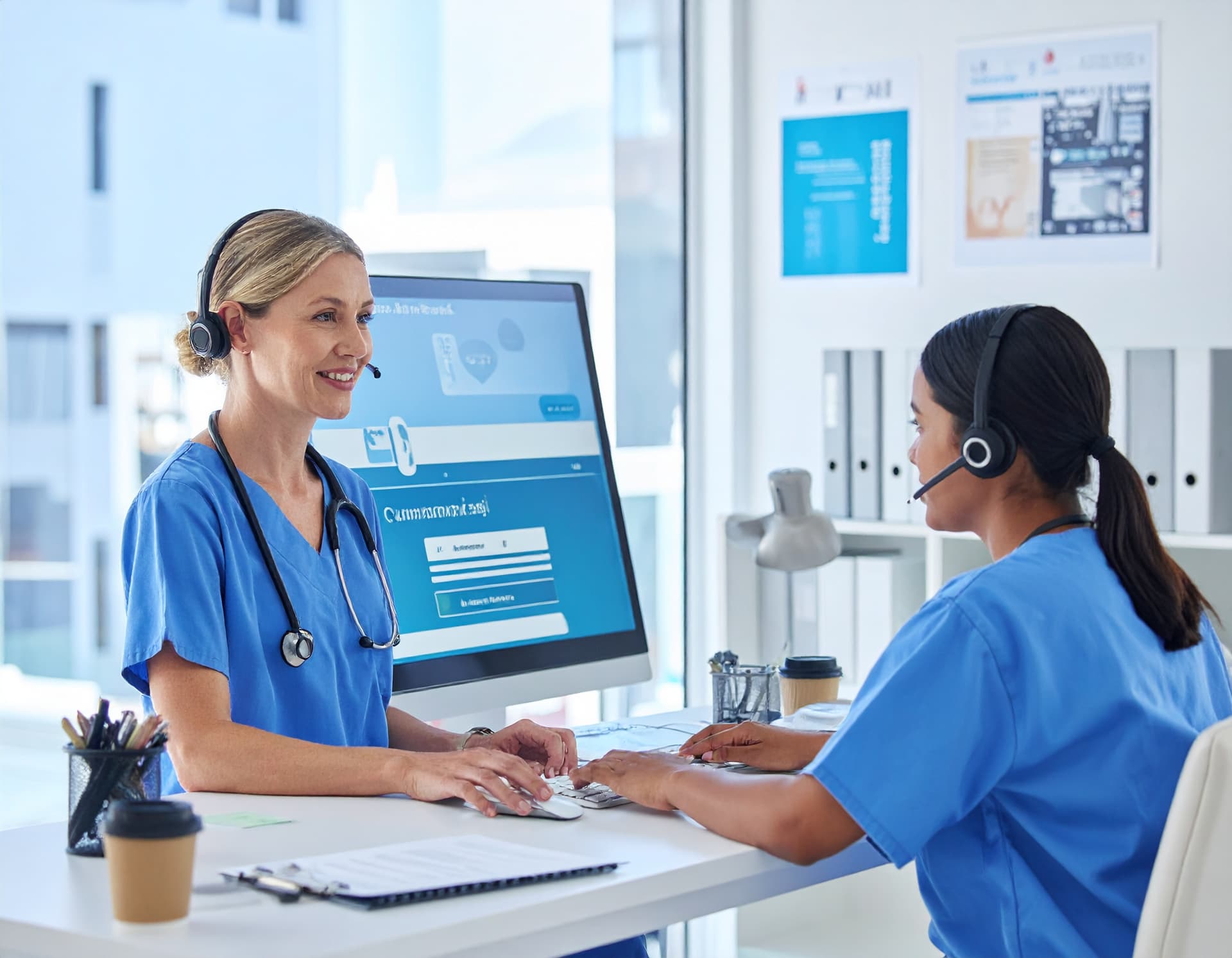
Smart Insights for Risk Management in Patient Communication in Healthcare
Introduction
Accurate communication in healthcare is essential for successful treatment outcomes. However, patients may not always be able to fully express their symptoms, or healthcare professionals may overlook critical information. These situations can threaten patient safety and complicate the recovery process.
This article explores how AI-powered smart insights are used to detect communication-related risks early and how proactive interventions improve treatment quality. The goal is to strengthen healthcare communication and increase both patient safety and satisfaction.
Early Detection of Risks in Patient Communication with Smart Insights
Smart insights help identify potential risks in communication between patients and healthcare professionals at an early stage. This enables timely interventions and helps prevent possible complications. Key focus areas include:
- Comprehensive analysis of patient data
- Evaluation of previous medical records
- Monitoring inconsistencies in communication
- Early detection of abnormal symptoms
- Development of proactive intervention plans
- Consideration of patient feedback
- Management of multi-channel communication
- Targeted training for healthcare staff
- Risk analysis using algorithms
- Continuous improvement mechanisms
Through this framework, healthcare systems can identify risks in advance and optimize intervention processes.
AI-Powered Proactive Intervention Strategies in Healthcare
AI-based systems continuously monitor patient conditions 24/7, allowing risks to be detected early and enabling timely intervention. This approach supports personalized treatment processes and reduces the risk of complications. It also improves communication between patients and healthcare providers. As a result, patient trust increases and overall healthcare quality improves.
Improving Patient Safety with Smart Data Analytics
Data analytics involves collecting and interpreting critical health data to ensure patient safety. This allows healthcare organizations to detect risk factors early and accelerate interventions. Key applications include:
- Comprehensive data collection and analysis
- Early identification of risk indicators
- Continuous monitoring of patient conditions
- Automated alerts for abnormal situations
- Preparation of proactive intervention plans
- Personalized treatment approaches
- Effective management of communication records
- Regular performance evaluation
- Root cause analysis of errors
- Informing healthcare staff
These practices improve patient safety while positively impacting treatment quality.
Personalized Risk Management in Patient Communication with AI
Preventing Clinical Errors Through Proactive Interventions
Smart insights help prevent clinical errors by enabling early risk detection. Information gathered from patient communication quickly reveals potential issues and supports safer treatment processes. This allows healthcare professionals to make more accurate decisions and significantly enhances patient safety.
Improving Communication Efficiency in Healthcare with Smart Insights
Improving communication efficiency directly impacts healthcare effectiveness. Smart insights optimize communication processes by anticipating patient needs. Key applications include:
- Early identification of risks through data analysis
- Prediction of patient needs
- Timely and accurate information delivery
- Personalized communication
- Active feedback systems
- Early warning mechanisms
- Integration of multiple communication channels
- Training programs for healthcare staff
- Improved doctor–patient interaction
- Protection of patient data privacy
These methods improve communication quality and strengthen the relationship between patients and healthcare professionals.
AI-Based Risk Analysis and Patient Monitoring Systems
AI-powered patient monitoring systems continuously analyze health data to detect risks in advance. Advantages include:
- Comprehensive health data analysis
- Rapid detection of risk factors
- Immediate identification of abnormal conditions
- Proactive communication and intervention
- Automation of monitoring processes
- Time savings for healthcare staff
- Increased patient trust
- Dynamically optimized treatment plans
- Data-driven decision support systems
- Continuously updated analytical reports
These features make patient monitoring more effective and reliable.
The Role of Digital Ecosystems in Patient Communication and Risk Management
Digital ecosystems strengthen risk management in patient communication. Healthcare institutions can securely manage patient data while optimizing communication processes. These tools improve patient experience and help reduce disruptions in treatment workflows, enhancing overall healthcare efficiency.
Development of Early Warning Systems with Smart Insights in Healthcare
Early warning systems monitor patient risk levels in real time, enabling timely intervention. Smart insights support the following applications:
- Risk detection through data analysis
- Real-time monitoring and evaluation
- Personalized alerts and notifications
- Pre-planned intervention strategies
- Monitoring patient behavior
- Communication timing optimization
- Improved patient satisfaction
- Integration with healthcare professionals
- Long-term health outcome improvement
- Patient education recommendations
- Automated feedback mechanisms
- Data security and privacy protection
These systems strengthen risk management and improve communication efficiency.
Use of Machine Learning and Deep Learning in Proactive Interventions
Machine learning and deep learning technologies analyze patient data in depth to identify potential risks in advance. This enables healthcare professionals to make more effective and timely interventions.
Data Security and Risk Management with Smart Insights in Healthcare
Protecting patient data privacy is a fundamental principle in healthcare. Smart insights, combined with strong security measures, help identify risks early and ensure safe data management. This improves patient satisfaction while maintaining high-quality healthcare services.
Decision Support Systems in AI-Powered Patient Communication
AI-based decision support systems simplify risk management in patient communication by analyzing real-time data and recommending appropriate interventions. Key benefits include:
- Early risk identification
- Personalized communication strategies
- Real-time data analysis
- Proactive alert systems
- Reduced communication errors
- Increased patient satisfaction
- Improved doctor–patient interaction
- Standardized care quality
- Data-driven decision-making
- Faster intervention times
These features make healthcare communication and risk management more effective.
Frequently Asked Questions
How are smart insights used in healthcare risk management?
Patient data is analyzed to identify risks early. These early warnings improve treatment processes and reduce complications.
Why is proactive patient communication important?
It prevents issues from escalating by providing timely information and increases patient involvement in their treatment.
How is risk management using smart insights implemented in hospitals?
Advanced systems analyze patient history and real-time data to detect risks early and alert healthcare teams for rapid action.
How do smart insights improve patient safety?
By identifying critical conditions early, they reduce treatment delays and errors, improving both safety and care quality.
How do proactive interventions affect patient experience?
Early alerts make patients feel safer, increase engagement in treatment, and improve overall satisfaction.